This is default featured slide 1 title

Go to Blogger edit html and find these sentences.Now replace these sentences with your own descriptions.This theme is Bloggerized by Lasantha Bandara - Premiumbloggertemplates.com.

This is default featured slide 2 title

Go to Blogger edit html and find these sentences.Now replace these sentences with your own descriptions.This theme is Bloggerized by Lasantha Bandara - Premiumbloggertemplates.com.

This is default featured slide 3 title

Go to Blogger edit html and find these sentences.Now replace these sentences with your own descriptions.This theme is Bloggerized by Lasantha Bandara - Premiumbloggertemplates.com.

This is default featured slide 4 title

Go to Blogger edit html and find these sentences.Now replace these sentences with your own descriptions.This theme is Bloggerized by Lasantha Bandara - Premiumbloggertemplates.com.

This is default featured slide 5 title

Go to Blogger edit html and find these sentences.Now replace these sentences with your own descriptions.This theme is Bloggerized by Lasantha Bandara - Premiumbloggertemplates.com.

Thursday, March 28, 2019

Ebook Download 2015 National Geographic Kids' Almanac Calendar

Ebook Download 2015 National Geographic Kids' Almanac Calendar

So, it will certainly not compel your time to always spend the time for this sort of guide. Simply few times in a day, and also you could obtain exactly what the various other readers expect. In this instance, 2015 National Geographic Kids' Almanac Calendar is given in soft file system. You could download and install as well as get guide from the link connecting that is supplied. It will not be complicated. You will go conveniently to locate the book as well as start to review.

2015 National Geographic Kids' Almanac Calendar

2015 National Geographic Kids' Almanac Calendar


2015 National Geographic Kids' Almanac Calendar


Ebook Download 2015 National Geographic Kids' Almanac Calendar

After waiting for the long time, now lastly it comes. A book that becomes one of one of the most waited products in this era! The book that will spread around the globe! Naturally this book is one that we advise for you. The best one as the very best thing to find in addition to! Now, again, guide is 2015 National Geographic Kids' Almanac Calendar

Sometimes, people could believe that analysis will be so awesome and also awesome. In addition, people that are reading are thought about as a very smart people. Is that right? Perhaps! One that can be remembered is that reading habit doesn't just do by the creative people. Many of brilliant people additionally really feel lazy to check out, moreover to review 2015 National Geographic Kids' Almanac Calendar It's seemly that people who have reading habit have different character.

Currently, you could recognize well that this book is mainly suggested not only for the visitors that love this subject. This is also promoted for all people and public kind culture. It will certainly not restrict you to read or otherwise the book. But, when you have begun or started to check out DDD, you will know why precisely guide will certainly offer you al positive points.

When choosing this 2015 National Geographic Kids' Almanac Calendar to obtain and also review, you will certainly start it from the initial page and also make offer to love it so much. Yeah, this publication truly has great problem of the book to check out. Just how the writer bring in the viewers is extremely clever. The web pages will reveal you why guide is presented for the wonderful individuals. They will certainly concern you to be one that is much better in undergoing the life and also improving the life.

2015 National Geographic Kids' Almanac Calendar

Product details

Calendar: 24 pages

Publisher: Zebra Publishing Corp. (July 1, 2014)

Language: English

ISBN-10: 1554567726

ISBN-13: 978-1554567720

Product Dimensions:

12.8 x 11.6 x 0.2 inches

Shipping Weight: 10.4 ounces

Average Customer Review:

5.0 out of 5 stars

2 customer reviews

Amazon Best Sellers Rank:

#2,362,868 in Books (See Top 100 in Books)

For my 4 yr old nephew. Keeps him curious and interested in learning.

A Christmas gift for my 4 yr. grandson.

2015 National Geographic Kids' Almanac Calendar PDF
2015 National Geographic Kids' Almanac Calendar EPub
2015 National Geographic Kids' Almanac Calendar Doc
2015 National Geographic Kids' Almanac Calendar iBooks
2015 National Geographic Kids' Almanac Calendar rtf
2015 National Geographic Kids' Almanac Calendar Mobipocket
2015 National Geographic Kids' Almanac Calendar Kindle

2015 National Geographic Kids' Almanac Calendar PDF

2015 National Geographic Kids' Almanac Calendar PDF

2015 National Geographic Kids' Almanac Calendar PDF

Free Download , by Jamie Hawke

Free Download , by Jamie Hawke

Reading this , By Jamie Hawke will provide you precious time to review. Even this is simply a publication, the idea provided is unbelievable. You can see how this book is offered making the better future. For you who in fact don't such as reading this publication, don't bother. Yet, allow us to inform you something interesting from this book. If you wish to make better life, get this publication. When you want to undergo a terrific life in the meantime and future, read this publication.

, by Jamie Hawke

, by Jamie Hawke


, by Jamie Hawke


Free Download , by Jamie Hawke

, By Jamie Hawke. Let's check out! We will typically discover this sentence everywhere. When still being a youngster, mama used to buy us to consistently read, so did the teacher. Some books , By Jamie Hawke are fully read in a week and we require the commitment to assist reading , By Jamie Hawke What about now? Do you still enjoy reading? Is checking out simply for you that have responsibility? Not! We below provide you a new publication entitled , By Jamie Hawke to read.

The , By Jamie Hawke that we attend to you will be supreme to give preference. This analysis publication is your picked book to accompany you when in your downtime, in your lonely. This sort of book can help you to heal the lonely as well as get or add the ideas to be more faulty. Yeah, publication as the widow of the world can be really inspiring good manners. As here, this publication is additionally produced by a motivating writer that can make influences of you to do more.

Now we invite once more, the representative book collections from this internet site. We always update the collections with the most recent publication presence. Yeah, released books are really covered incidentally of the recommended info. The , By Jamie Hawke material that is provided really includes just what you need. In order to evoke the reasons of this book to read, you must really know that the history of this publication originates from a wonderful writer and also expert author.

This book is offered in soft data types. You can download it. One that will influence you to read this book is that it can be your personal selection to earn far better really feels. Your life is yours. And also picking this , By Jamie Hawke as your analysis product is additionally your choice. However right here, we really advise you to read this book. You can locate what exactly the variables we present. Simply get this publication and review it, so you can acquire the reasons of why you should read.

, by Jamie Hawke

Product details

File Size: 3271 KB

Print Length: 320 pages

Page Numbers Source ISBN: 1797809989

Simultaneous Device Usage: Unlimited

Publisher: Double Down Press (February 20, 2019)

Publication Date: February 20, 2019

Sold by: Amazon Digital Services LLC

Language: English

ASIN: B07NYYMYR5

Text-to-Speech:

Enabled

P.when("jQuery", "a-popover", "ready").execute(function ($, popover) {

var $ttsPopover = $('#ttsPop');

popover.create($ttsPopover, {

"closeButton": "false",

"position": "triggerBottom",

"width": "256",

"popoverLabel": "Text-to-Speech Popover",

"closeButtonLabel": "Text-to-Speech Close Popover",

"content": '

' + "Text-to-Speech is available for the Kindle Fire HDX, Kindle Fire HD, Kindle Fire, Kindle Touch, Kindle Keyboard, Kindle (2nd generation), Kindle DX, Amazon Echo, Amazon Tap, and Echo Dot." + '
'

});

});

X-Ray:

Not Enabled

P.when("jQuery", "a-popover", "ready").execute(function ($, popover) {

var $xrayPopover = $('#xrayPop_2BBD880E532E11E9BF1D36EB3402DAAE');

popover.create($xrayPopover, {

"closeButton": "false",

"position": "triggerBottom",

"width": "256",

"popoverLabel": "X-Ray Popover ",

"closeButtonLabel": "X-Ray Close Popover",

"content": '

' + "X-Ray is not available for this item" + '
',

});

});

Word Wise: Enabled

Lending: Not Enabled

Screen Reader:

Supported

P.when("jQuery", "a-popover", "ready").execute(function ($, popover) {

var $screenReaderPopover = $('#screenReaderPopover');

popover.create($screenReaderPopover, {

"position": "triggerBottom",

"width": "500",

"content": '

' + "The text of this e-book can be read by popular screen readers. Descriptive text for images (known as “ALT text”) can be read using the Kindle for PC app and on Fire OS devices if the publisher has included it. If this e-book contains other types of non-text content (for example, some charts and math equations), that content will not currently be read by screen readers. Learn more" + '
',

"popoverLabel": "The text of this e-book can be read by popular screen readers. Descriptive text for images (known as “ALT text”) can be read using the Kindle for PC app if the publisher has included it. If this e-book contains other types of non-text content (for example, some charts and math equations), that content will not currently be read by screen readers.",

"closeButtonLabel": "Screen Reader Close Popover"

});

});

Enhanced Typesetting:

Enabled

P.when("jQuery", "a-popover", "ready").execute(function ($, popover) {

var $typesettingPopover = $('#typesettingPopover');

popover.create($typesettingPopover, {

"position": "triggerBottom",

"width": "256",

"content": '

' + "Enhanced typesetting improvements offer faster reading with less eye strain and beautiful page layouts, even at larger font sizes. Learn More" + '
',

"popoverLabel": "Enhanced Typesetting Popover",

"closeButtonLabel": "Enhanced Typesetting Close Popover"

});

});

Amazon Best Sellers Rank:

#12,941 Paid in Kindle Store (See Top 100 Paid in Kindle Store)

An exciting continuation of. The last book. Very fast paste and hard to put down. I loved the new characters.

if you like time travel, hot pirate chicks and ninjas. you will love this book

a little crazy.

The second book in the Lost Pirates series by the outrageous Jamie Hawke, The Shadow of Time carries on the titillating space fantasy that began Frank's ascent to 'sultan' of a harem of red-hot pirate lassies.As he hunts for the gem missing from the time compass invented by his grandpa, the world he leaves behind changes completely to a bewildering alternate reality complete with a ninja grandpa, pirate grandma and even Viking Mafia members, who all add to the general mayhem and merriment.If you love spicy erotic romps, with a laugh or two along the way this series is for you - go for it!

I loved the first chapter of this saga. The characters were real sexy and passionate. The action crisp and decisive. Much is the same in this volume. Their is more time travel, and the creation of alternate worlds and alternate characters, and much of this gets confusing , to this reader, as well as the characters, especially when multiple time paths lead to multiple lead characters. It is like dc comics merging of the world's , except it can be very confusing. Still, most of the action is clear, the characters strong , and loving and sexy. Just weird . Self loving alternate lovers. Viking mafia. And sexual ninja grandad, and pirate grandma. Messy, but fun.

This book is the sequel of Lost Pirates. I never got the chance to read the first one, but this book has a recap which explained the story so far. I enjoyed pretty much of the book. I liked the action, the characters, and the setting. On my con side, there are some parts, which I thought is kind of cheesy. Frank getting a new girl is rushed, and she didn't care if he has other girls. I guess where she comes from, it doesn't matter. But the book did great and I hope the next one will do well too.

The author did a awesome job on sucking me into this book. This is my favorite series that he writes the plot was fast paced and interesting with some good action scenes.

Good book I can't wait to read the next book in the series I would recommend this book to anyone

, by Jamie Hawke PDF
, by Jamie Hawke EPub
, by Jamie Hawke Doc
, by Jamie Hawke iBooks
, by Jamie Hawke rtf
, by Jamie Hawke Mobipocket
, by Jamie Hawke Kindle

, by Jamie Hawke PDF

, by Jamie Hawke PDF

, by Jamie Hawke PDF

Tuesday, March 26, 2019

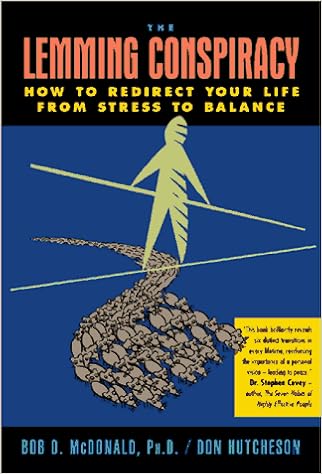
Download PDF The Lemming Conspiracy: How to Redirect Your Life from Stress to Balance (Includes Bibliographical References), by Bob D. McDonald

Download PDF The Lemming Conspiracy: How to Redirect Your Life from Stress to Balance (Includes Bibliographical References), by Bob D. McDonald

This The Lemming Conspiracy: How To Redirect Your Life From Stress To Balance (Includes Bibliographical References), By Bob D. McDonald deals a fascinating subject. If you have not yet attempt reading this kind of publication, this is your time to start and also begin it. Be the first title to review in this kind of topic offers the more priceless scenario. You may be truly common with this book, but you have no idea to also review it, have you? To cover this condition, this supplied book is served in soft file to be available saved in your beautiful device.

The Lemming Conspiracy: How to Redirect Your Life from Stress to Balance (Includes Bibliographical References), by Bob D. McDonald

The Lemming Conspiracy: How to Redirect Your Life from Stress to Balance (Includes Bibliographical References), by Bob D. McDonald


The Lemming Conspiracy: How to Redirect Your Life from Stress to Balance (Includes Bibliographical References), by Bob D. McDonald


Download PDF The Lemming Conspiracy: How to Redirect Your Life from Stress to Balance (Includes Bibliographical References), by Bob D. McDonald

Seeing the library daily might not become your style. You have many tasks as well as activities to do. But, you have to look for some reading publications, from literary to the national politics? Exactly what will you do? Choosing to acquire guide occasionally when you are associating pals to the book store appropriates. You can search as well as discover the book as you like. Yet, exactly what about your referred book is not there? Will you walk around once more as well as do look and find anymore? Occasionally, many individuals will certainly be so lazy to do it.

Many people likewise attempt to get this The Lemming Conspiracy: How To Redirect Your Life From Stress To Balance (Includes Bibliographical References), By Bob D. McDonald to check out. It's due to the fact that they will certainly constantly upgrade the brand-new life, not only based upon their life in their age however additionally in this new growing period. When this publication is advised, why you need to choose this as soon as possible? This is a sort of book that has large amount with the growth of the life top quality. Also this is a great book; you could not feel so bother with how you can recognize it.

Among inspiring factors that you can decided to get this publication is because this is really appropriate to the condition that you face now. The problem is not only for you that are not scared to obtain new point, for you who always feel that you require brand-new sources to make better life. As well as this book is really proper to check out even in just brief leisure time. Yeah, with the soft file of The Lemming Conspiracy: How To Redirect Your Life From Stress To Balance (Includes Bibliographical References), By Bob D. McDonald, you could take simple to continuously read and also read this publication once again.

Finding this The Lemming Conspiracy: How To Redirect Your Life From Stress To Balance (Includes Bibliographical References), By Bob D. McDonald as the appropriate book actually makes you feel happy. Even this is simply a publication; you can discover some benefits that cannot be received from any other resources. Satisfying the curious it is at some time very easy, yet sometime it needs the big effort. As below, before finding this internet site to get the book, you might feel so baffled. Why? It's because you really need this remarkable publication to check out immediately.

The Lemming Conspiracy: How to Redirect Your Life from Stress to Balance (Includes Bibliographical References), by Bob D. McDonald

The pressure to achieve on the job usually undermines efforts to create a fulfilling life at home. And, even as personal pursuits are sacrificed to "get ahead", many people wonder if they are traveling down the wrong career path. Based on the principles of the authors' highly successful career counseling program, this book demonstrates how readers can take control of their lives, rectify career dissatisfaction, and avoid burnout.

Read more

Product details

Series: Includes Bibliographical References

Hardcover: 240 pages

Publisher: Longstreet Pr; Second Printing edition (September 1, 1997)

Language: English

ISBN-10: 1563524236

ISBN-13: 978-1563524233

Product Dimensions:

6.2 x 1 x 9.5 inches

Shipping Weight: 1.2 pounds (View shipping rates and policies)

Average Customer Review:

4.1 out of 5 stars

7 customer reviews

Amazon Best Sellers Rank:

#926,279 in Books (See Top 100 in Books)

Unlike other career guidance books that force the reader into existing job titles, this book offers wonderful insights and process to guide you to developing and designing your own customized career/job. TLC looks at the whole person, and factors in the need for personal and professional balance to get more out of life. Kudos to the authors for writing a book that instilled the courage to break-away and do what I love, leading a life I look forward to each day.

Good

The quote from Alan Arkin The Lemming Condition, says it all! This is so appropriate for today's society. "Fearful of what lay ahead, but even more afraid of complete isolation, [the Lemming] threw himself into the crowd. It was defeat, and [he] knew it, but it was mixed with great relief. All decisions were gone. So was concern for the future, so was the fear of conflicting with his own kind."Wake up! Be a part of the solution and not the problem! Come out of the darkness into the light!!!

I read this book in preparation for a life & career strategic planning course and ability testing when I was 43 years old. I had been laid off from a good job, had been temping & part-timing it for a couple years, and was just undecided about what I should do next. I had plenty of ideas, and many of them sounded good -- at the moment -- but I was just so unsure about which was the right path, which would be fulfulling for me, and on what factors I should base my decisions. Well, this book was a key to my recovery! I soaked it up like a sponge, as it addressed many of the issues I was grappling with and helped me get back on the road to a fulfilling life. It's great at helping you determine what's important and identifying the values which guide key life decisions. I heartily recommend this book for anyone at a crossroads, in transition, or just unsure about how to make their next career move and provide the right balance in their life. This book is one of the best career and overall life-planning books on the market! Enjoy!

Yes, finally a clear and direct approach to asking the questions we all need to be asking of ourselves, namely, "who am I, what do I want out of my life, and how do I go about asking the right questions which will provide a path for me to follow?" So many books of this genre are well-meaning but tend to wallow in emotionalism and pop-psychology babble once the deeper issues come up. I found these authors better able to cut through the cobwebs, and they provide a balanced framework for reaching the next level in our careers, our relationships, our lives. We all have patterns of behavior (conditioning) which we've learned, from family, friends, associates, which we can see only if we're willing to look at ourselves honestly - and what does THAT mean? This book can help. Certain patterns hold us back from being and living "real". We're all lemmings to a degree. The book is a fine guide on how to find the pearls of our true selves beneath the layers of family, school, business and social "systems" which in truth have only their own interests at heart. If you're serious about finding a way off the treadmill towards a balanced, value-driven and individual manner of living, buy this book and do this work. Your life will explode with richness.

After reading the first few pages of TLC, I had to put it down for a moment. The authors had described the last three years of my life almost perfectly. I didn't put it down again for two hours. I'm a highly compensated information worker who "has it all" by most people's standards, but still feels unfulfilled. TLC showed me how to examine my talents and skills and use them more effectively to achieve what I really want from my life. I cannot recommend it highly enough.

I read a great book by this author called "Don't Waste Your Talent" and the information about the lemming conspiracy was fascinating, so I searched for more. When I saw another book by the same author titled "The Lemming Conspiracy", I jumped at the chance to learn more. Bottom line, it was the same book as the other I had read. What is up with that????Love the book and certainly worth the read, just make sure you only buy one!Don't Waste Your Talent: The 8 Critical Steps To Discovering What You Do Best

The Lemming Conspiracy: How to Redirect Your Life from Stress to Balance (Includes Bibliographical References), by Bob D. McDonald PDF
The Lemming Conspiracy: How to Redirect Your Life from Stress to Balance (Includes Bibliographical References), by Bob D. McDonald EPub
The Lemming Conspiracy: How to Redirect Your Life from Stress to Balance (Includes Bibliographical References), by Bob D. McDonald Doc
The Lemming Conspiracy: How to Redirect Your Life from Stress to Balance (Includes Bibliographical References), by Bob D. McDonald iBooks
The Lemming Conspiracy: How to Redirect Your Life from Stress to Balance (Includes Bibliographical References), by Bob D. McDonald rtf
The Lemming Conspiracy: How to Redirect Your Life from Stress to Balance (Includes Bibliographical References), by Bob D. McDonald Mobipocket
The Lemming Conspiracy: How to Redirect Your Life from Stress to Balance (Includes Bibliographical References), by Bob D. McDonald Kindle

The Lemming Conspiracy: How to Redirect Your Life from Stress to Balance (Includes Bibliographical References), by Bob D. McDonald PDF

The Lemming Conspiracy: How to Redirect Your Life from Stress to Balance (Includes Bibliographical References), by Bob D. McDonald PDF

The Lemming Conspiracy: How to Redirect Your Life from Stress to Balance (Includes Bibliographical References), by Bob D. McDonald PDF

Tuesday, March 12, 2019

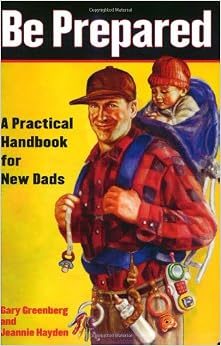
Ebook Free Be Prepared, by Gary Greenberg Jeannie Hayden

Ebook Free Be Prepared, by Gary Greenberg Jeannie Hayden

When Be Prepared, By Gary Greenberg Jeannie Hayden is attended to you, it's clear that this book is really compatible for you. The soft data concept of this likewise brings convenience of exactly how you will enjoy guide. Of course, delighting in the book can be just done by analysis. Reading the books will lead you to always recognize every word to compose and also every sentence to utter. Many people often will have various means to utter their words. However, from the title of this publication, we're sure that you have actually known just what anticipate from guide.

Be Prepared, by Gary Greenberg Jeannie Hayden

Be Prepared, by Gary Greenberg Jeannie Hayden


Be Prepared, by Gary Greenberg Jeannie Hayden


Ebook Free Be Prepared, by Gary Greenberg Jeannie Hayden

Need an aid to discover the brand-new released book? Don't bother! Don't think so hard since we are constantly into aid you. Whoever you are, to discover guide, from numerous countries, is currently easy. Right here, we have the lots collections of different kinds and also categories of the books. Guides are provided in soft documents systems and also you could discover the link for each book to download and install.

various sight. Yeah, this book gets rid of a brand-new thing that will not only influence, yet also improve lesson and also experience. Having this Be Prepared, By Gary Greenberg Jeannie Hayden, also as soft data, will certainly verify that you have joint to be one of the hundreds viewers on the planet. Yeah, you're one part of the great individuals who like this book.

When speeding up and also promoting this publication we are additionally so certain that you can gain the lesson as well as knowledge conveniently. Why? With your basic knowledge and also ideas, your alternative to mix with the lessons used by this book is really outstanding. You can locate the ideal choice of just how the here and now book in this lesson is acquired. And also now, when you are actually find of this sort of book subject, you could obtain the file of guide in this rest.

Make this publication as favourite publication to read now. There is no much better book with the exact same subject as this one. You could see exactly how the words that are written are actually suitable to encourage your problem to earn far better. Now, you can also feel that the things of Be Prepared, By Gary Greenberg Jeannie Hayden are proffered not just for making good opportunities for the visitors yet also offer excellent atmosphere for the outcome of what to create.

Be Prepared, by Gary Greenberg Jeannie Hayden

Amazon.com Review

Take your average guide for new mothers, chuck most of the stuff about breast feeding and ditch the deep background research and stats, then generously pepper with illustrations and burley humor and what do you have? Your average guide for new fathers. Be Prepared follows that template pretty closely, and that's really quite an acceptable thing. Yes, there's a bit too much emphasis here on broadly drawn manly stuff like changing a diaper at a ballgame, but there's also heaps of useful advice that's cleverly and efficiently presented for pops who, despite their best intentions, really aren't prepared to dig into encyclopedia-sized tomes. The basics (childproofing, bathing, feeding, entertaining) intermix with nifty sidebars (homemade bath toys, foods to never give your baby, exercises for dads) in easy-to-peruse chapters organized according to the age of the offspring up to age 1. There are more thorough how-to guides for new dads, but for most men moving into fatherhood, Be Prepared will fill the bill. --Steven Stolder

Read more

From Publishers Weekly

Parenting is hard, and reading many of the jargon-filled parenting books out there can make it even harder, but with a combination of smart writing and clever illustrations, husband-and-wife team Greenberg (The Pop-up Book of Phobias; etc.) and illustrator Hayden make both seem fun, if not easy. As the subtitle suggests, the book is filled with advice that will appeal to the solution-centered male perspective, from step-by-step swaddling instructions to a guide for identifying six distinct infant crying patterns. (A hunger cry, for example, is "a pattern of low-pitched, rhythmic moans, growing more and more insistent," whereas a boredom pattern is "a low-volume whimper which stops and starts irregularly.") Not only is Greenberg and Hayden's information useful, but it's also been vetted by "several distinguished fellows" at the American Academy of Pediatrics. Along with the conventional chapters on baby-proofing your house and taking a baby's temperature are more obscure—and amusing—topics, such as how to videotape your baby and how to conduct a "Mirror Puppet Sing Along" to sooth a crying baby while driving (the technique requires two mirrors, a hand-puppet and an indifference to looking silly). Hayden's drawings strike just the right balance between textbook-boring and tongue-in-cheek funny, depicting everything from a sketch of a bottle of teething gel to a drawing of an exhausted father snoozing in a business meeting. Greenberg and Hayden have succeeded in providing new dads (and many moms, for that matter) with an entertaining and informative cheat sheet. Copyright © Reed Business Information, a division of Reed Elsevier Inc. All rights reserved.

Read more

See all Editorial Reviews

Product details

Paperback: 240 pages

Publisher: Simon & Schuster; 1 edition (June 1, 2004)

Language: English

ISBN-10: 0743251547

ISBN-13: 978-0743251549

Product Dimensions:

6 x 0.6 x 9 inches

Shipping Weight: 13.4 ounces (View shipping rates and policies)

Average Customer Review:

4.7 out of 5 stars

1,088 customer reviews

Amazon Best Sellers Rank:

#1,767 in Books (See Top 100 in Books)

I got this for my husband when we found out I was pregnant, and he absolutely loved it. The book was written with humor, which made it fun for him - and he learned a lot, often teaching ME things that he'd gleaned from his reading. Honestly, of all the expectant daddy books out there, I can't imagine one more perfect than this. Great info, presented in a very palatable style.

This is definitely written for guys, skips all the crap, gets to the point. Although its really more of a book for once the baby is born, not really a great precursor book.

Informative and damn funny. It even has illustrations. For the lazy reader this book is for you. It's like I'm getting solid advice from a close pal over beers. I may have even enjoyed a beer or two while reading this. Fortunately my kid will survive in my care now.

This book is great! Funny and informative- I got it for my husband but enjoyed it myself and recommended it to friends. It’s an easy read, and filled with funny, useful illustrations. Very happy with this purchase.

Boy Scouts Motto, "Be Prepared". This new Dad recommends it. Even if you don't use any of the info in it or if you are absolutely not involved physically or emotionally in your partner/wife's pregnancy. Because the simple fact that you took time to read this tells me that is not likely you. This book will certainly help you keep your head in the game, when that first contraction happens. The birthing classes help but a quick refresher and reread never hurts.

This is a really fun and funny book to read, with great information. I bought it for my husband, and he loves it. I was jealous because all of my pregnancy books were so boring and unfunny in comparison. I also enjoyed reading this book! Great diagrams and humorous drawings as well. Definitely get it if you're going to be a new dad or mom! Most importantly, its not of the "you're a guy so you must be an idiot stereotypical clueless dad to be" type. It doesn't talk down to you. We loved it.

Bought this book for our first pregnancy. My wife is now full term, and so far this book has been very helpful. It is an easy-read with lots of graphics. I can pick it up whenever I have a question, and find the section that I need. It is not something that has to be read cover to cover. There are some great tips and pieces of advice that have saved us some potential headaches and even arguments. I wish there was an online component for when I am on the go. Recommended for a father-to-be.

We enjoyed thus bok so much when we were expecting. We've since bought it for every new pregnancy in our friends group. It's a nice change to some of the scary be prepared books. It informs you with s nice but of satire. Great for the dad to be that doesn't really want to be lectured.

The perfect, manly dad-to-be book. Concise, list and task-oriented and really funny. At the risk of sounding sexist, it speaks to men from men – and I don't mean mansplaining. It's superb, it's wonderful! The drawings are entirely of men, and inclusive of dads of all walks of life, sizes, shapes and varieties. Although it was a bit dated, for instance using a camcorder or how to remove objects from a VCR or tape, maybe there is a revised edition that I didn't see; no matter, creative solutions abound and ideas are certainly transferrable.This book is truly handy, not just cleverly written. It has amazing (perhaps common sense but not if you're a super tired new dad) solutions to common problems that one only learns either too late or as they say, the hard way.Highly recommend as a gift for any new dad!

Be Prepared, by Gary Greenberg Jeannie Hayden PDF
Be Prepared, by Gary Greenberg Jeannie Hayden EPub
Be Prepared, by Gary Greenberg Jeannie Hayden Doc
Be Prepared, by Gary Greenberg Jeannie Hayden iBooks
Be Prepared, by Gary Greenberg Jeannie Hayden rtf
Be Prepared, by Gary Greenberg Jeannie Hayden Mobipocket
Be Prepared, by Gary Greenberg Jeannie Hayden Kindle

Be Prepared, by Gary Greenberg Jeannie Hayden PDF

Be Prepared, by Gary Greenberg Jeannie Hayden PDF

Be Prepared, by Gary Greenberg Jeannie Hayden PDF

Friday, March 8, 2019

Free PDF Empire of Cotton: A Global History, by Sven Beckert

Free PDF Empire of Cotton: A Global History, by Sven Beckert

We understand that you are also fan of the writer of this book. So, it will certainly not be worse for you to choose it as recommendation. Empire Of Cotton: A Global History, By Sven Beckert, as one of the important books to review can be thought about as a book that offers you something recommended. You can take the similar subject from various other book, but the one that could give you far better impact is this publication. This condition will actually influence you to serve the trustworthy choice.

Empire of Cotton: A Global History, by Sven Beckert

Empire of Cotton: A Global History, by Sven Beckert


Empire of Cotton: A Global History, by Sven Beckert


Free PDF Empire of Cotton: A Global History, by Sven Beckert

Do you think that Empire Of Cotton: A Global History, By Sven Beckert is an excellent publication? Yes, we believe so, looking and recognizing that the writer of this publication; we will definitely know that it is an excellent book to read each time. The author of this book is incredibly popular in this topic. When somebody requires the recommendation from the topic, they will seek for the information and data from guides written by this author.

We understand as well as realize that often publications will certainly make you really feel bored. Yeah, investing sometimes to only read will exactly make it true. Nonetheless, there are some methods to conquer this issue. You could just spend your time to review in few web pages or for filling up the extra time. So, it will certainly not make you really feel tired to always face those words. And one important point is that this publication supplies really intriguing subject to read. So, when reviewing Empire Of Cotton: A Global History, By Sven Beckert, we make sure that you will not find bored time.

Why we provide this publication for you? We sure that this is what you intend to review. This the proper publication for your analysis material this time around recently. By discovering this publication below, it shows that we always offer you the proper book that is required amongst the culture. Never question with the Empire Of Cotton: A Global History, By Sven Beckert Why? You will certainly unknown exactly how this book is in fact prior to reading it until you complete.

Stray at home or workplace, you could take it conveniently. Simply by linking to the net and also obtain the link to download, you expectation to obtain this book is recognized. This is exactly what makes you really feel completely satisfied to get over the Empire Of Cotton: A Global History, By Sven Beckert to read. This legible book includes simple languages for reading by all individuals. So, you might not need to feel depressed to find the book as good for you. Just determine your time to gain the book and locate the suggestion for other books here.

Empire of Cotton: A Global History, by Sven Beckert

Review

“Masterly. . . . Deeply researched and eminently readable, Empire of Cotton gives new insight into the relentless expansion of global capitalism.  With graceful prose and a clear and compelling argument, Beckert not only charts the expansion of cotton capitalism . . . he addresses the conditions of enslaved workers in the fields and wage workers in the factories.  An astonishing achievement.”—Thomas Bender, New York Times “Important  . . .a major work of scholarship that will not be soon surpassed as the definitive account of the product that was, as Beckert puts it, the Industrial Revolution’s ‘launching pad.’” —Adam Hochschild, New York Times Book Review             “Breathtakingly comprehensive, informative and provocative.” —Glenn C. Altschuler, Tulsa World “Persuasive . . . brilliant . . . Beckert’s detailed narrative never scants the rich complexity of the cotton trade’s impact on many different societies.” —Wendy Smith, Boston Globe  “Empire of Cotton proves Sven Beckert one of the new elite of genuinely global historians.  Too little present-day academic history is written for the general public. ‘Empire of Cotton’ transcends this barrier and should be devoured eagerly, not only by scholars and students but also by the intelligent reading public. The book is rich and diverse in the treatment of its subject. The writing is elegant, and the use of both primary and secondary sources is impressive and varied. Overviews on international trends alternate with illuminating, memorable anecdotes. . . . Beckert’s book made me wish for a sequel.” —Daniel Walker Howe, The Washington Post “Momentous and brilliant . . . Empire of Cotton is among the best nonfiction books of this year.” —Karen R. Long, Newsday “Compelling . . . Beckert demonstrates persuasively how the ravenous cotton textile trade in Europe was instrumental in the emergence of capitalism and draws a direct line from the practices that nourished this empire to similar elements in the production of goods for today’s massive international retailers. Those who long to know more about how and why slavery took hold in Europe, Africa and the Americas will find this book to be immensely enlightening.  Better still, those who live out the troubled legacy of the exploitation and enslavement of workers in the service of the cotton empire will find in it added inspiration for their continuing efforts to realize a just and more equitable society.” —Ruth Simmons, President Emeritus of Brown University  “Intellectually ambitious . . . a masterpiece of the historian’s craft.” —Timothy Shenk, The Nation “A highly detailed, provocative work.” —Booklist “Hefty, informative, and engaging . . . Beckert’s narrative skills keep the story of capitalism fresh and interesting for all readers.” —Publishers Weekly “[Beckert’s] close-up study of the cotton economy is a valuable model for the study of capitalism generally, an economic system in which slavery and colonialism were not outliers but instead integral to the whole . . . a valuable contribution.” —Kirkus “Fascinating and profound. . . . Global history as it should be written.” —Eric Foner

Read more

About the Author

Sven Beckert is the Laird Bell Professor of American History at Harvard University. Holding a PhD from Columbia University, he has written widely on the economic, social, and political history of capitalism. He has been the recipient of numerous awards and fellowships, including from Harvard Business School, the Dorothy and Lewis B. Cullman Center for Scholars and Writers at the New York Public Library, and the Charles Warren Center for Studies in American History. He was also a fellow of the American Council of Learned Societies and the John Simon Guggenheim Memorial Foundation. He lives in Cambridge, Massachusetts.

Read more

See all Editorial Reviews

Product details

Paperback: 640 pages

Publisher: Vintage; Reprint edition (November 10, 2015)

Language: English

ISBN-10: 0375713964

ISBN-13: 978-0375713965

Product Dimensions:

5.2 x 1.2 x 8 inches

Shipping Weight: 1.2 pounds (View shipping rates and policies)

Average Customer Review:

4.0 out of 5 stars

227 customer reviews

Amazon Best Sellers Rank:

#60,843 in Books (See Top 100 in Books)

This is an academic treatment of how the modern industrial economy was born: heavy in detail, clear in analysis, if somewhat dry at times. While much of the ground has been covered elsewhere, the synthesis, breadth, and grand themes that emerge are unavailable in a single volume, to my knowledge. For me, it was a seminal reading experience, a necessary perspective that brought things together in a way that will influence my view of modern society for the rest of my life.The principal idea of the book is that the cotton industry, which represented the first step in the development of the modern industrial economy, was created by slavery and brutal and ever-more-efficient state coercion in cooperation with private capital. Global in scale, this convergence of factors would re-fashion the everyday lives of a majority of people on the planet - subordinating their working days to the rhythms of machines that replaced human muscle labor, opening the way to unprecedented prosperity for many, and enabling decisionmakers far from their homes to control the lives of people they will never meet.Beckert sees several steps in these developments. In the beginning, there was the development of "war capitalism". In a nutshell, this was the forcible appropriation of land and labor, with the cooperation of a primitive form of the state. While cotton had been in use for millenia, it was limited to small, very local, networks at this time. As demand grew and new forms of mechanized manufacture began to appear, war capitalism vastly increased the scale of cotton cultivation, employing slaves to undertake the backbreaking work of clearing the land and then the thankless task of harvesting the cotton - their utility was cheap labor that could be forced to work by any means necessary. Meanwhile, the state aided in the acquisition of land - because it exhausted the soil quickly, cotton cultivation required continual land appropriation - and the displacement or elimination of whomever was unfortunate enough to occupy that land, in most cases Amer-Indians. For their part, capitalist traders emerged in Manchester, a mercantile capital that gained tremendous market influence and political power to bring the state into alignment with their interests.The next phase opened with the invention of new means of production, in particular in the harnessing of chemical power in mills of ever-expanding scale and with elaborate forms of administrative innovation. At the same time, the state got involved with the protection and establishment of markets for their goods, both in supply but also for selling, i.e the distribution of goods. Industry was national and nationalistic. The natural culmination of this was the colonial enterprise. This was the second great legacy of the cotton empire: the de-industrialization and control of vast new territories. For example, the skills required for the production of the fine muslin of India were completely and forever destroyed. The native populations were subjugated to this order, fitting integrally into a hierarchy that exploited them while enriching captains of industry and politicians in colonial capitals. Meanwhile, manufacturing facilities became the source of massive employment, drawing people from the countryside to urban agglomerations that grew to then-incredible proportions.Furthermore, the state remained intimately involved in the development of the economy in the major colonial states, not only in the development of supporting infrastructure, but in the legal subjugation of workers for the protection of the evolving industrial practices. This was the crucial step in the virtuous circle that arose of self-reinforcing economic development, resulting in a far more intricate and complex industrial economy that emerged in the product cycles of related manufactures. It can only be described as a revolution that changed our lives so fundamentally that it is on a par with the neolithic revolution.Of particular interest is the evolution of the political economy of slavery. It was seen as a necessity for cotton production in the American South - a phenomenally profitable enterprise that created capital for further industrial investment that benefited all free Americans regardless of location - and as a crucial basic resource for all the new manufacturing powers. When the American Civil War began, it severely disrupted the world economy, based as it was on cotton, and the industrialized nations desperately sought to increase the supply of raw cotton. After that war, it was proven that low-wage sharecroppers could be counted on to produce cotton in a profitable way, supported as it was by state and private repression of the newly freed slaves. The colonial powers took note of this. In the US South, this arrangement was to survive for almost a full century, when automated cotton picking was finally perfected in the 1940s.The most recent phase of the industry is its globalization, a shift of manufacturing to the former colonies. The real power gravitated to transnational corporations - predominantly retailers like Walmart or Gap - that were no longer subject to coherent national legal jurisdictions, hence largely disconnected from nationalistic considerations. While this caused the precipitous decline of once-prosperous cities like Liverpool, it is part of the ebb of flow of 21C capitalism. Organizational innovation extended to the development of massive logistical networks to handle getting cotton to manufacturers and then distributing their low-cost products in developed nations at a hefty profit. As this is so new, it is the least developed portion of the book. I suspect it decisively locks Third World producers and manufacturers into a lower-value added position, where design and brand generate greater profits for transnational corporations and their shareholders that no longer need to worry about employees in their home base of operation.The implications of the book are of great interest and relevancy. First, it proves that the free classes all benefited directly and lastingly from slavery as an enabler of the first phase of industrialization. Without slaves (and subsequently share croppers or colonial serfs), both investment capital and the self-reinforcing and expanding product base of consumer capitalism would have accumulated far more slowly, perhaps over centuries rather than decades. This is the best argument for reparations that I have yet seen - the line from slavery and colonialism to prosperity for most of us is direct, while the descendants of slaves and serfs remain exploited and oppressed. Second, the state functioned as a crucial support for the development of private enterprise, from protecting nascent industries to enforcing laws that favored the manufacturing class. This flies in the face of neo-liberal ideology, which argues for a "free trade" that locks the developing world into an inferior status.This book is a wonderful intellectual adventure, its ideas are far more subtle than I could ever express here. It is a bit too academic for my taste, covering developments in exhaustive detail, but on the whole it is a page turner. Recommended with the greatest enthusiasm.

At the heart of Harvard history professor Sven Beckert’s award-winning book, “Empire of Cotton: A Global History,” is a simple but compelling syllogism: the wealthy, capitalist world we Americans live in today was created by the Industrial Revolution; the Industrial Revolution was driven by massive productivity gains in textile manufacturing; cotton was the essential raw ingredient that powered textile manufacturing. Thus, if it weren’t for cheap and plentiful supplies of raw cotton, the world we live in today might very well look quite different.The way Beckert tells the story, it seems to me, is that there have essentially been five major epochs in global cotton production and manufacturing.First, for most of world history, cotton was a locally produced and consumed commodity. Eastern Africa, South Asia (India, specifically), and Central America were the cradles of the early cotton industry, which Beckert writes developed independently, yet along similar lines as the raw cotton was processed and spun in close proximity to where it was grown, usually in individual households and by women.Second, over the course of centuries beginning around 1500, Europeans radically transformed the world of cotton through what Beckert calls “war capitalism”: a violent mixture of imperial expansion, slavery, and land expropriation. To start, Europeans captured the international trade network of Indian textiles from the overland Arab traders once sea routes were mapped and key coastal port cities dominated. Control of the transportation network then reinforced the system as African slave traders demanded Indian calicoes for their human chattel that were, in turn, required to work the sugar fields of the West Indies that generated massive wealth for the semi-private companies operating out of London and Continental Europe. The last piece of the cotton process puzzle to elude Europeans was manufacturing, primarily because they had no ready access to raw cotton and the labor costs of European workers were orders of magnitude greater than that of rural Indians.Third, and in this reviewer’s opinion the real heart of the story, is Europe’s rapid and shocking domination of textile manufacturing beginning in the 1790s, and the associated role of slavery in the American South in making that happen.The construction of Samuel Greg’s simple little factory, Quarry Bank Mill, on the Bollin River outside of Manchester, England in 1784 might have seemed unremarkable at the time, but it set in motion “the most important event in world history,” according to the celebrated (Marxist, it must be noted) historian Eric Hobsbwam: the Industrial Revolution. Beckert argues that war capitalism – that aforementioned combination of slavery, colonial domination, militarized trade, and land expropriations – provided the foundation for industrial capitalism, and the manufacturing of cotton would be the driving commodity behind its development. Indeed, Beckert writes, “industrial capitalism was the offspring of war capitalism, the previous centuries’ great innovation.”War capitalism had given England control over many nodes in the global cotton network, but manufacturing still eluded its grasp. The primary challenge was labor rates. The only way the British could hope to compete with the Indians who had dominated the market for centuries was through massive productivity gains leveraging new technology. British innovations like the flying shuttle (1733), spinning jenny (1760), water frame (1769), and mule (1779) combined to produce breathtaking efficiencies. For example, it took an estimated 50,000 man-hours to produce 100 lbs. of raw cotton in India in the 1750s. By 1790, water-powered British factories around Manchester had cut the time to 1,000 hours, and would drop to 300 hours by 1795.Beckert writes that cotton manufacturing “was the first major industry in human history that lacked locally produced raw materials.” As British manufacturing skyrocketed, so too did the demand for (and price of) raw cotton. The production methods of the traditional suppliers – India and the Ottomans – simply could not keep up. Manchester traders turned to the West Indies and their large slave plantations to pick up the slack, which were effective but constrained by limited available land for expansion into cotton, fierce competition from sugar farming, slave rebellions (Haiti had provided 24% of England’s cotton before the 1791 revolt), and eventually the war with France.As a result, cotton farming in the United States exploded in the years just after independence. Indeed, American cotton for export was almost unknown before the mid-1790s. Not only did the revolt in Haiti deprive the Manchester mills of raw material, it also dispersed experienced cotton plantation managers to the low country of the American South. Moreover, when Eli Whitney invented the cotton gin in 1793 it increased productivity with American Upland cotton by a factor of 50 virtually overnight.The combined results of these events was staggering. From 1.5 million pounds of cotton produced in 1790 (2% of total US export value), output jumped to 36.5 million pounds in 1800 and climbed to 167.5 million pounds (32% of total exports) by 1820. By the start of the Civil War cotton accounted for nearly two-thirds of total US export values. No wonder so many believed “King Cotton” might force England into an open military alliance with the Confederacy. After all, American cotton had fueled the export of British yarn from 350,000 pounds in 1794 to a staggering 200 MILLION pounds in 1860. Unlike other potential competitors, the United States possessed virtually limitless land (much of it expropriated from Native Americans), an abundance of slave labor, and the capital necessary for the development of large-scale agricultural operations. Plantation owners quickly emerged as “the world’s most important growers of the industrial age’s most important commodity”; the Mississippi Delta “a kind of Saudi Arabia of the early 19th century,” in one of Beckert’s many memorable phrases.Dependence on American cotton was worrying to manufacturers in England. What if the rapidly industrializing, fledgling republic across the Atlantic should decide to invest in cotton manufacturing themselves? Or cut favorable deals with continental competitors? Worst still, how much longer was slave labor politically tenable? In an effort to diversify the sources of supply, the British government attempted to build experimental, southern-style plantations in India, complete with American cotton farmer managers. Every attempt failed. Growing cotton, it seemed, was only viable with slave labor.It was during the fourth epoch in cotton history that this thesis was dramatically put to the test, a period I’d call “post-bellum cotton colonialism.” At the start of the U.S. Civil War, American cotton accounted for 75% to 90% of all European manufacturing needs. From 3.8 million bales of cotton in 1860, U.S. cotton exports to Europe fell to virtually zero two years later. Prices for raw cotton quadrupled. The world was gripped by a “cotton famine,” what Beckert suggests was “the world’s first truly global raw material crisis.” England turned again to India, this time with no alternative. By 1862, India was supplying 75% of England’s raw cotton, up from just 16% two years before. Brazilian and Egyptian cotton production also jumped. “The crisis of American slavery in effect forced and enabled the reconfiguration of the cotton growing countryside” all around the world is a way that previous attempts failed to produce. But these efforts were aided by highly inflated raw cotton prices. What would a world with cotton but without slavery ultimately look like?The global cotton network responded with remarkable vigor and success. Raw cotton, which traded for $0.11 per pound in 1860 and remained as high as $0.24 by 1870 dropped to $0.07 per pound by 1894, all while global consumption of cotton doubled. So how were such feats of agricultural productivity achieved without slave labor? According to Beckert, it was driven by a new, powerful imperial state in partnership with industry. Between 1876 and 1915, a quarter of the world’s land surface was carved up among the industrial powers. In the wake of slavery, and reaching deep inland across the cotton growing regions of the world, a new system of credit, private land ownership, contract law and industrial infrastructure projects (railroads, canals, telegraphs) bolstered harvest yields to new heights, even across the former Confederacy where sharecroppers clawed their way back so that by 1890 they were producing twice their pre-war records and reclaimed their dominant position supplying the British mills.“Cotton and colonial expansion went hand in hand,” Beckert writes. England in India and Egypt, Japan in Korea and China, Russia in Central Asia, and the United States in the Native American lands of the West all aggressively pushed cotton production to meet global demand while growing domestic textile industries. Between 1860 and 1920, 55 million acres (roughly the size of Minnesota) across the globe – from the German colony of Togo in West Africa to the vast steppes of Central Asia – were repurposed, often forcefully by the state, for cotton production. Powerful nation states, in league with industrial enterprises, “secured huge swaths of territory on which cotton could be grown and they their accumulated bureaucratic, infrastructural, and military might to mobile cotton growing labor,” often by recasting social arrangements similar to those used to foster the growth of industrial wage labor in the early days of the Industrial Revolution.But what about the processing of all that raw cotton into usable yarn and thread, not to mention the manufacturing of finished products, such as the mass production of inexpensive shirts and dresses? That required an entirely different type of labor: wage labor. “It is difficult to overstate the importance and revolutionary nature of this new organization of human labor,” Beckert writes. Mobilizing large numbers of workers, perhaps thousands, paying them fixed wages and then monitoring their work and effort was an entirely novel concept in the early nineteenth century.Finally, we are today living in a world of global, post-modern cotton. “The empire of cotton has continued to facilitate a great race to the bottom”… as “capitalism both demands and creates a state of permanent revolution.” A mere century ago, a typical, middle-class American’s cotton dress shirt would have been produced from a cotton boll grown in Mississippi, woven and spun into thread in a Massachusetts mill, and then sewn into the final product in a New York City workshop. Today, we (Americans) wear cotton shirts from fibers likely grown in Uzbekistan or Senegal, spun and woven into thread in China or Pakistan, and manufactured into our hip, “Casual Friday Appropriate”, GAP buttoned-down Oxford in Bangladesh or Vietnam.Beckert stresses that cotton production has exploded in growth while moving almost effortlessly to the lowest cost producer. In 1860, when the American South ruled with “King Cotton,” the territory of the former Confederacy produced a relatively astounding 5 million bales of cotton, the vast majority of the world’s supply at the time. Yet, by 2012, the heavily federally subsidized United States cotton growing industry (which received $35 billion in subsides between 1995 to 2010), mostly based in Texas and Arizona, produced over three times that amount, some 17 million bales of cotton, or just over 14% of the world’s production. Meanwhile, cotton growing and manufacturing has returned to its roots, such as China, whose factories today account nearly half of the world’s spindles and looms, and whose fields generate nearly a third of the global annual cotton crop (India, another pre-industrial cotton society, has also re-emerged as a leading producer, accounting for a fifth of global raw cotton production today). Cotton has been a globalized industry since at least the late 19th century, but today’s globalization is different in some remarkable ways, according to the author, namely that modern multinational corporations, such as Walmart or the French retailing giant Carrefour, are both enormously influential buyers of finished cotton goods and yet, unlike before, largely independent from any insurmountable coercive pressure from specific nation states.In sum, “Empire of Cotton” is a brilliant history of an indispensible commodity, easily on par with such classics as Daniel Yergin’s “The Prize” history of petroleum or Peter Bernstein’s “The Power of Gold.”

Empire of Cotton: A Global History, by Sven Beckert PDF
Empire of Cotton: A Global History, by Sven Beckert EPub
Empire of Cotton: A Global History, by Sven Beckert Doc
Empire of Cotton: A Global History, by Sven Beckert iBooks
Empire of Cotton: A Global History, by Sven Beckert rtf
Empire of Cotton: A Global History, by Sven Beckert Mobipocket
Empire of Cotton: A Global History, by Sven Beckert Kindle

Empire of Cotton: A Global History, by Sven Beckert PDF

Empire of Cotton: A Global History, by Sven Beckert PDF

Empire of Cotton: A Global History, by Sven Beckert PDF

Monday, February 25, 2019

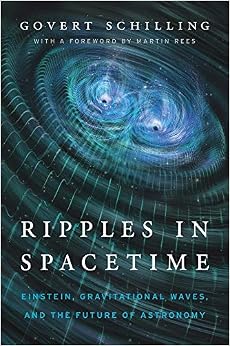
Download PDF Ripples in Spacetime: Einstein, Gravitational Waves, and the Future of Astronomy, With a New Afterword

Download PDF Ripples in Spacetime: Einstein, Gravitational Waves, and the Future of Astronomy, With a New Afterword

If you have found out about this site, it will be better as well as you have actually known that guides are typically in soft data types. As well as currently, we will certainly welcome you with our new collection, Ripples In Spacetime: Einstein, Gravitational Waves, And The Future Of Astronomy, With A New Afterword This is our upgraded publication to offer in the listing of this site book. You can take it as the recommendation for your work as well as your day-to-day activity. There is no idea to find join us to discover the tough publication. However right here, you can find it so very easy that it could make you feel satisfied.

Ripples in Spacetime: Einstein, Gravitational Waves, and the Future of Astronomy, With a New Afterword

Ripples in Spacetime: Einstein, Gravitational Waves, and the Future of Astronomy, With a New Afterword


Ripples in Spacetime: Einstein, Gravitational Waves, and the Future of Astronomy, With a New Afterword


Download PDF Ripples in Spacetime: Einstein, Gravitational Waves, and the Future of Astronomy, With a New Afterword

After couple of time, ultimately guide that we as well as you wait for is coming. So relieved to obtain this excellent publication readily available to provide in this website. This is guide, the DDD. If you still feel so hard to get the printed publication in guide shop, you can join with us once more. If you have actually ever got the book in soft documents from this publication, you could conveniently get it as the referral currently.

This letter might not influence you to be smarter, however guide Ripples In Spacetime: Einstein, Gravitational Waves, And The Future Of Astronomy, With A New Afterword that our company offer will evoke you to be smarter. Yeah, at least you'll understand greater than others that do not. This is just what called as the quality life improvisation. Why ought to this Ripples In Spacetime: Einstein, Gravitational Waves, And The Future Of Astronomy, With A New Afterword It's since this is your preferred style to read. If you like this Ripples In Spacetime: Einstein, Gravitational Waves, And The Future Of Astronomy, With A New Afterword motif around, why don't you read guide Ripples In Spacetime: Einstein, Gravitational Waves, And The Future Of Astronomy, With A New Afterword to improve your discussion?

When you can serve the truth in getting much information from analysis, why should you ignore it? Numerous effective individuals likewise are success from checking out several publications. From publication to book completed have actually been numerous, it's vast. As well as this Ripples In Spacetime: Einstein, Gravitational Waves, And The Future Of Astronomy, With A New Afterword is the one that you need to check out. Even you are starter to review, this book will be additionally so useful to handle. After ending up reading, the lesson and message that is added can be reached conveniently. This is one of the most effective seller publication need to be.

We will certainly show you the most effective and easiest method to obtain publication Ripples In Spacetime: Einstein, Gravitational Waves, And The Future Of Astronomy, With A New Afterword in this globe. Lots of collections that will support your responsibility will be right here. It will certainly make you really feel so best to be part of this site. Coming to be the participant to consistently see just what up-to-date from this book Ripples In Spacetime: Einstein, Gravitational Waves, And The Future Of Astronomy, With A New Afterword website will certainly make you feel best to search for guides. So, just now, and also below, get this Ripples In Spacetime: Einstein, Gravitational Waves, And The Future Of Astronomy, With A New Afterword to download as well as wait for your priceless worthwhile.

Ripples in Spacetime: Einstein, Gravitational Waves, and the Future of Astronomy, With a New Afterword

Review

“In a sweeping new book, Ripples in Spacetime: Einstein, Gravitational Waves, and the Future of Astronomy, prolific science writer Govert Schilling has achieved the fascinating trifecta of historical and scientific accuracy, a grand sense of wonder and curiosity, and brilliantly accessible storytelling…Ripples in Spacetime goes far beyond the gravitational wave story you've heard over the past few years…It belongs on the shelf of anyone interested in learning the scientific, historical, and personal stories behind some of the most incredible scientific advances of the 21st century. As our scientific progress continues, this book will serve as a reminder of how far we’ve already come, how we got there, and what we’re looking forward to with our most hopeful ambitions.”―Ethan Siegel, Forbes“A succinct, accessible, and remarkably timely survey of gravitational-wave astronomy as it developed over the past century…This book is a rare find…The book’s remarkable breadth and accessibility should make it the first piece of reading material for anyone―from high school students to policymakers―with an interest in gravitational waves…Ripples in Spacetime sets itself apart by putting the entire field into perspective―past, present, and future. It conveys a sense of awe about a century of scientific investment and achievement and a sense of excitement for what’s to come.”―Richard O’Shaughnessy, Physics Today“Schilling gives us a lively and readable account of the [gravitational] waves’ discovery... Schilling underlines that this discovery is the opening of a new window on the universe, the beginning of a new branch of science. Astronomers will no longer be limited to observing space through the waves of electricity and magnetism (for example, visible light) entering telescopes, but will be able to observe it through waves of gravity. Galileo would have been amazed.”―Graham Farmelo, The Guardian“A detailed account of the quest to detect gravitational waves.”―James Ryerson, New York Times Book Review“Ripples in Spacetime provides a comprehensive and approachable guide to a complex subject.”―Monica Young, Sky & Telescope“[Ripples in Spacetime] explains complex ideas clearly and entertainingly…It details the personalities, rivalries, collaborations, controversies, setbacks and successes of the century-long quest to test Einstein’s theories. Bang up to date, the book describes science in progress and as a process: how ideas are developed and discoveries made and rejected or confirmed. The best part for me was the detail the book goes into about the first detection and the meticulous protocols in place to scrutinize and eliminate every possible error. Schilling also looks ahead to what we can expect in this whole new field of astronomy. This is a book for everyone who was as excited as I was when the [Laser Interferometer Gravitational-Wave Observatory] discovery first broke, but also for anyone who wants to know what all the fuss was about.”―Jenny Winder, BBC Sky at Night Magazine“In September 2015, a new frontier in astronomy beckoned with the first direct detection of gravitational waves, confirming Albert Einstein's prediction almost a century before. Govert Schilling's deliciously nerdy grand tour takes us through compelling backstory, current research, and future expectations.”―Barbara Kiser, Nature“[Ripples in Spacetime] offers the reader a journey that goes beyond its title, exploring and connecting topics such as the cosmic-microwave background and its polarization, radioastronomy and pulsars, supernovae, primordial inflation, gamma-ray bursts and even dark energy… The book gives an interesting (and sometimes surprising) glimpse into the lives, aspirations and mutual interactions of the scientific pioneers in the field of gravitational waves.”―Guillermo Ballestero, CERN Courier“A fascinating story of astronomy…Schilling walks readers through a lucid history of the universe, of general relativity, and of the bumpy search for Einstein’s last major unconfirmed prediction: the existence of gravitational waves…Schilling delivers a lively, expert, mostly comprehensible account, equal parts politics, personality, and science, of the search that ended two years ago…Schilling emphasizes that this is not simply another feather in Einstein’s cap, but a valuable new tool. The early universe was opaque to radiation until 380,000 years after the Big Bang, but gravity waves poured out from almost the beginning, so a new field of ‘gravitational wave astronomy’ can look back almost to the birth of the cosmos. An exciting history of the second great breakthrough of 21st-century physics.”―Kirkus Reviews (starred review)“In this elegant and captivating book Govert Schilling takes us by the hand through a century of scientific adventures to one of the biggest discoveries of history.”―Robbert Dijkgraaf, Director and Leon Levy Professor, Institute for Advanced Study

Read more

About the Author

Govert Schilling is an astronomy journalist and writer based in the Netherlands.Martin Rees is a cosmologist and space scientist based in Cambridge, England. He holds the honorary title of Astronomer Royal.

Read more

Product details

Paperback: 368 pages

Publisher: Belknap Press; 2 edition (March 18, 2019)

Language: English

ISBN-10: 0674237749

ISBN-13: 978-0674237742

Product Dimensions:

5.5 x 1 x 8.2 inches

Shipping Weight: 9.9 ounces (View shipping rates and policies)

Average Customer Review:

4.2 out of 5 stars

17 customer reviews

Amazon Best Sellers Rank:

#456,008 in Books (See Top 100 in Books)

In another book review I said that it’s easy to tell the difference between a book written by a scientist and a book written about science by a professional writer. This is the latter. Nothing wrong with that, of course — you trade the first-hand account of the scientist involved in a field for the third person narrative, by someone whose trade is writing and telling a good story.Really, it’s a choice for the reader. Do you want to focus on the science or on the story? Of course, the author tries to do both, but, in this case, it’s the story that takes precedence, with sometimes explicit time-outs to explain the science (e.g., a chapter on the Big Bang).The core of the book is the story of the first confirmed detection of gravitational waves, generated by colliding black holes, in September, 2015, by LIGO (Laser Interferometer Gravitational-Wave Observatory) in Hanford, Washington and Livingston, Louisiana.Schilling takes us through the history leading up to gravitational wave detection, from their prediction in general relativity through early attempts to detect their presence, and on to the surprisingly quick detection once LIGO came online. He takes some pains to explain both the history — gravitational waves were speculated upon prior to Einstein’s publications — and some of the physics behind them.Exactly what a gravitational wave is requires some explanation. Typically, waves are explained through analogy — a rock falls into a pond, causing waves to propagate through the pond’s water. But the analogy falls short. There is no medium like the water in the pond — the waves are ripples in space, or spacetime, itself. The ripples don’t propagate through space, the waves are waves in space itself — expansions and contractions in spacetime caused by gravitational events, like a collision between black holes. It doesn’t take a cataclysmic event like a collision of black holes to create gravitational waves, but it does take an event of that magnitude to trigger current detection technology.Schilling’s story captures the drama of the detection, but he also, rightly I think, tells the story of how the detectors were built. Gravitational waves were theoretical. No one had observed them. They were predicted, and their effects were observed. But to actually detect them was going to take a serious investment of time and money, not to mention the careers of the scientists involved. Getting funding for detecting something that may or may not exist, and may or may not be detectable with the planned instruments — that’s not an easy thing to go to funding sources with, in the United States or elsewhere.And what is the payoff?Confirming a principal prediction of general relativity is a huge payoff for scientists. Knowing that our account of the universe is confirmed at such a foundational level not only increases our confidence in that account. But it also sets constraints around where we have to go next, in the looming problem of reconciling quantum theory with general relativity. Some scientists expected, and may still expect, gravitational waves to expose problems in relativity theory that will lead us to that reconciliation. So far, general relativity is left standing in its predictions.Maybe more than anything else, though, gravitational wave detection presents us with what Schilling describes as a kind of additional sense modality. Gravitational waves are a wholly different phenomenon from electromagnetic radiation, sound waves, or any other medium through which we can observe what happens in the universe. When we opened our extended senses to radio, microwave, and other non-optical parts of the electromagnetic spectrum, we detected things that were completely unknown, like the cosmic microwave background legacy of the big bang. The ability to detect gravitational waves doesn’t just open another part of the same spectrum, but a completely different medium for observation. As Schilling says, it’s probably what will surprise us that will turn out to be most valuable.And in fact observing gravitational waves has some distinct advantages over observations of electromagnetic radiation. Gravitational waves are not absorbed or reflected by dust or gas — emissions from their points of origin travel unhindered to our detectors. And some currently poorly understood phenomena, like dark matter and dark energy, have especially interesting gravitational properties and effects, maybe best studied via gravitational wave astronomy, complementing more traditional astronomy. Schilling teases some of those possibilities in his final chapter.And gravitational wave detection may help us to understand some of the missing pieces in the story of the universe’s evolution from the Big Bang. "Primordial black holes” may be detectable via gravitational waves and give us some clues to those missing pieces.The universe is actually heavily populated with natural gravitational wave detectors — pulsars. Pulsars emit highly regular, fast pulses of radiation — their regularity, fast pace, and strength of signal make them natural clocks. If there is a change in the period of a pulsar’s signal, something has caused it, and the something might be the stretching or contracting of space via gravitational waves.Observations of changes in pulsar timing via radio telescopes are one active area for gravitational wave detection.Schilling’s later chapters look forward to other sorts of detectors, extensions of the design behind LIGO and the similar Virgo detector in Italy. These include space-based detectors like the European Space Agency’s long-planned LISA, and an underground detector, KAGRA, in Japan, as well as a LIGO-like detector in India. An even more ambitious ground-based detector called ET (Einstein Telescope) is also in planning stages, and an American project, Cosmic Explorer, with yet greater sensitivity to detect fainter and fainter gravitational waves is in idea-stage.If you’re looking to catch up on the story of gravitational waves, and maybe go on to more depth on the science itself, this is a great place to start. Schilling is a good writer, he knows enough about the science to explain it for a relatively non-technical audience, and he knows how to tell the story.

While I am glad I read this book, I found the author's many chatty comments gratuitous, irritating, and condescending. The material seemed a bit stretched to me, as if to consume more pages. Fuller discussion of a few things the author apparently deemed beyond our ken would have been a more profitable use of pages. Adding Martin Rees as a co-author when all he wrote was the forward mislead me, but that was probably my fault for not reading the fine print. I bought this on the recommendation of a trusted friend who listened to it as an audio book. Maybe the author's "voice" worked better in that medium. For the price of the hard cover I bought I expected a better treatment of the subject. But some of the author's analogies were quite good by way of explaining, and that seems to be his strength. I'd add an extra half star for that element if I could. I usually read these kinds of books with impatient gusto in a couple of days, but it took me well over a week to finish this one.

A book having a strong approach to many questions of general relativity. The style of author is clear and the lector follows it with attention and interest. So we have several informations about the great events of modern physics. A good list of notions very useful for applications of theory. Several arguments given for sure by theoretical view are posed in contraddiction with the experimental results.

The best review of the search for gravitational waves you will find. Humorous, accurate, and lots of background - open to general readers and scientifically-minded alike. If you want to see what all the buzz is about, this book will tell you.

Insightful, concisely presented and readable. A superb presentation of cutting-edge science (for those of us who still believe in the discipline)...

Great way to explain complex subjects to us, ignorant mortals.From stars life-cycle to gravitation and Einstein ideas on time and space , this book focus on the research about gravitational waves and why it makes sense (and a fascinating subject too).

Clearly written. Ties together loose ends from other authors on this extraordinary suibject.

Simply Astonishing! Every young student of Physics or Astronomy should leap at the chance to read this one! What a captivating inspiring story! I raced through the first 100 pages in a single sitting, then rationed myself to a single chapter per day to make the book last longer. I found that every time I picked it up to read some more, I was drawn in deeper and deeper. Each of the dozens of stories told in this book are woven together to support the main story, but with each side trip (to things such as Pulsars, the inner workings of Neutron stars, Weber bars, Carl Sagan's Apple Pie, BICEP2, Milisecond Pulsars, Frame Dragging, the anomalous precession of Mercury just to name a few) I'd reluctantly close the book, but my mind simply couldn't shut off after putting it down, and I'd be anxiously awaiting the next chance I'd have to spend another 30-minutes in this treasure trove of astonishing facts, and would find myself diving deeper into many of the topics Schilling brought up. Schilling writes with passion for the subject, and though I consider myself well-versed in Astronomy and Physics, there were so many fascinating nuggets in this story, that it was easy to be astonished anew! Highly recommended!! GREAT BOOK!!

Ripples in Spacetime: Einstein, Gravitational Waves, and the Future of Astronomy, With a New Afterword PDF
Ripples in Spacetime: Einstein, Gravitational Waves, and the Future of Astronomy, With a New Afterword EPub
Ripples in Spacetime: Einstein, Gravitational Waves, and the Future of Astronomy, With a New Afterword Doc
Ripples in Spacetime: Einstein, Gravitational Waves, and the Future of Astronomy, With a New Afterword iBooks
Ripples in Spacetime: Einstein, Gravitational Waves, and the Future of Astronomy, With a New Afterword rtf
Ripples in Spacetime: Einstein, Gravitational Waves, and the Future of Astronomy, With a New Afterword Mobipocket
Ripples in Spacetime: Einstein, Gravitational Waves, and the Future of Astronomy, With a New Afterword Kindle

Ripples in Spacetime: Einstein, Gravitational Waves, and the Future of Astronomy, With a New Afterword PDF

Ripples in Spacetime: Einstein, Gravitational Waves, and the Future of Astronomy, With a New Afterword PDF

Ripples in Spacetime: Einstein, Gravitational Waves, and the Future of Astronomy, With a New Afterword PDF

Sunday, February 17, 2019

Free PDF The Collected Poems of Lucille Clifton 1965-2010 (American Poets Continuum), by Lucille Clifton Kevin Young

Free PDF The Collected Poems of Lucille Clifton 1965-2010 (American Poets Continuum), by Lucille Clifton Kevin Young

The Collected Poems Of Lucille Clifton 1965-2010 (American Poets Continuum), By Lucille Clifton Kevin Young. Is this your downtime? Just what will you do after that? Having spare or leisure time is really amazing. You can do every little thing without pressure. Well, we mean you to exempt you few time to review this book The Collected Poems Of Lucille Clifton 1965-2010 (American Poets Continuum), By Lucille Clifton Kevin Young This is a god publication to accompany you in this spare time. You will not be so tough to know something from this publication The Collected Poems Of Lucille Clifton 1965-2010 (American Poets Continuum), By Lucille Clifton Kevin Young Much more, it will aid you to obtain better details as well as encounter. Even you are having the fantastic works, reading this book The Collected Poems Of Lucille Clifton 1965-2010 (American Poets Continuum), By Lucille Clifton Kevin Young will not add your thoughts.

The Collected Poems of Lucille Clifton 1965-2010 (American Poets Continuum), by Lucille Clifton Kevin Young

The Collected Poems of Lucille Clifton 1965-2010 (American Poets Continuum), by Lucille Clifton Kevin Young


The Collected Poems of Lucille Clifton 1965-2010 (American Poets Continuum), by Lucille Clifton Kevin Young


Free PDF The Collected Poems of Lucille Clifton 1965-2010 (American Poets Continuum), by Lucille Clifton Kevin Young

The Collected Poems Of Lucille Clifton 1965-2010 (American Poets Continuum), By Lucille Clifton Kevin Young. In undergoing this life, several individuals consistently try to do and also obtain the very best. New understanding, experience, session, and every little thing that could enhance the life will be done. Nevertheless, lots of people often feel confused to obtain those points. Really feeling the limited of encounter as well as sources to be far better is one of the does not have to possess. However, there is a really easy thing that could be done. This is what your teacher always manoeuvres you to do this. Yeah, reading is the solution. Reading an e-book as this The Collected Poems Of Lucille Clifton 1965-2010 (American Poets Continuum), By Lucille Clifton Kevin Young and various other referrals could enrich your life quality. Exactly how can it be?

By just linking to the internet as well as locate the web link that we always provide in every web page, you can subsequent guide to get. They are in the soft file programs. Currently, we will present you The Collected Poems Of Lucille Clifton 1965-2010 (American Poets Continuum), By Lucille Clifton Kevin Young as a reading book today. We are truly certain that this book will be really purposeful for you as well as people around you. As many individuals in various other areas, they have actually taken this publication as their analysis collection. So, we recommend to you to obtain additionally this book.

The The Collected Poems Of Lucille Clifton 1965-2010 (American Poets Continuum), By Lucille Clifton Kevin Young as one of the recommended items has actually been written in order to motivate the people life. It is genuine truth about what to do and also what took place. When someone asks about something, you may not be so hard after getting numerous impacts and lessons from reading books. Among them is this publication. The book is suggested one to be sensible publication sources.

So, when you have actually located guide and also aim to review it previously, you can be one step forward to your good friends who have not read it yet. This publication does not offer you anything, yet it will offer you several points to discover and also act. When you have actually decided to begin reading as your behavior, you can appreciate The Collected Poems Of Lucille Clifton 1965-2010 (American Poets Continuum), By Lucille Clifton Kevin Young as one of the product to review first. Reviewing will not be bound, actually. Reviewing is one's need that could looking at any individual else. You can be part of the book lovers as well as good visitors to always read and end up the helpful books.

The Collected Poems of Lucille Clifton 1965-2010 (American Poets Continuum), by Lucille Clifton Kevin Young

Review

“From the earliest poems collected here, we see the familial merged seamlessly with the political, the general woven with the homespun…All poetry readers will want to own this book; almost everything is in it.”—Publishers Weekly“If there is any doubt that Lucille Clifton (1963-2010) was one of the powerfully original poetic voices of our time, this volume should dispel it. Poem after poem, book after book, that varied but ever vigorous voice sang fearlessly and gracefully… Clifton’s was a multifarious intelligence that could at times seem otherworldly; she inhabited and was attentive to both physical and spiritual plains; she spoke with the dead and the living with confidence. While her work could be contemporary and personal, she was often drawn to tell and retell ancient tales… She was an enlightened and enlightening poet, and this collection shines a welcome light on her work.” —Open Books: A Poem EmporiumA selection for Ms. Magazine's 2012 Best Books by Women, The Collected Poems of Lucille Clifton 1965-2010 is a "welcome anthology, representative of more than 40 years of Clifton’s writing. If you’re not yet familiar with Clifton’s incredible mix of the familial and the political, this is one book you need right now.” —Ms. Magazine"What is so valuable is that she goes directly and not without anger and confusion into these life-and-death matters, allowing the reader to empathize, and share, in her recognition that survival is a triumph. What is even more valuable is that she recognizes that the reader too survives … When Clifton writes such poems, she is among the very few true poets of our times.”—The Nation“From the earliest poems collected here, we see the familial merged seamlessly with the political, the general woven with the homespun…All poetry readers will want to own this book; almost everything is in it.”―Publishers Weekly“If there is any doubt that Lucille Clifton (1963-2010) was one of the powerfully original poetic voices of our time, this volume should dispel it. Poem after poem, book after book, that varied but ever vigorous voice sang fearlessly and gracefully… Clifton’s was a multifarious intelligence that could at times seem otherworldly; she inhabited and was attentive to both physical and spiritual plains; she spoke with the dead and the living with confidence. While her work could be contemporary and personal, she was often drawn to tell and retell ancient tales… She was an enlightened and enlightening poet, and this collection shines a welcome light on her work.” ―Open Books: A Poem EmporiumA selection for Ms. Magazine's 2012 Best Books by Women, The Collected Poems of Lucille Clifton 1965-2010 is a "welcome anthology, representative of more than 40 years of Clifton’s writing. If you’re not yet familiar with Clifton’s incredible mix of the familial and the political, this is one book you need right now.” ―Ms. Magazine"What is so valuable is that she goes directly and not without anger and confusion into these life-and-death matters, allowing the reader to empathize, and share, in her recognition that survival is a triumph. What is even more valuable is that she recognizes that the reader too survives … When Clifton writes such poems, she is among the very few true poets of our times.”―The Nation

Read more

About the Author

Lucille Clifton: Lucille Clifton was born in Depew, New York, on June 27, 1936. Her first book of poems, Good Times, was rated one of the best books of the year by the New York Times in 1969.Clifton remained employed in state and federal government positions until 1971, when she became a writer in residence at Coppin State College in Baltimore, Maryland, where she completed two collections: Good News About the Earth (1972) and An Ordinary Woman (1974).She went on to write several other collections of poetry, including Voices (BOA Editions, 2008); Mercy (2004); Blessing the Boats: New and Selected Poems 1988-2000 (2000), which won the National Book Award; The Terrible Stories (1995), which was nominated for the National Book Award; The Book of Light (1993); Quilting: Poems 1987-1990 (1991); Next: New Poems (1987)Her collection Good Woman: Poems and a Memoir 1969-1980 (1987) was nominated for the Pulitzer Prize; Two-Headed Woman (1980), also a Pulitzer Prize nominee, was the recipient of the University of Massachusetts Press Juniper Prize. She has also written Generations: A Memoir (1976) and more than sixteen books for children, written expressly for an African-American audience.Lucille Clifton's honors include an Emmy Award from the American Academy of Television Arts and Sciences, a Lannan Literary Award, two fellowships from the National Endowment for the Arts, the Shelley Memorial Award, the YM-YWHA Poetry Center Discovery Award, and the 2007 Ruth Lilly Prize.In 1999, she was elected a Chancellor of the Academy of American Poets. She served as Poet Laureate for the State of Maryland and Distinguished Professor of Humanities at St. Mary's College of Maryland.After a long battle with cancer, Lucille Clifton died on February 13, 2010, at the age of 73.Toni Morrison: Toni Morrison is a Nobel Prize and Pulitzer Prize-winning American novelist, editor, and professor. Among her best known novels are The Bluest Eye, Song of Solomon and Beloved.Kevin Young: Kevin Young is the author of seven books of poetry, most recently Ardency: A Chronicle of the Amistad Rebellion, out from Knopf in January 2011. His Jelly Roll: A Blues, was a finalist for the National Book Award and the Los Angeles Times Book Prize, and winner of the Paterson Poetry Prize. He is the editor of five volumes, including 2010's The Art of Losing: Poems of Grief and Healing; his book The Grey Album: Music, Shadows, Lies won the 2010 Graywolf Nonfiction Prize and is forthcoming in 2012. He is the Atticus Haygood Professor of Creative Writing and English and Curator of Literary Collections and the Raymond Danowski Poetry Library at Emory University in Atlanta.Michael S. Glaser: Michael Glaser served as Poet Laureate of Maryland, from August 2004 through August 2009. He graduated from Denison University with a B.A. and from Kent State University with a M.A. and Ph.D. He began teaching at St. Mary's College of Maryland in 1970, retired and became a Professor Emeritus in 2008. He has published six collections of poetry and edited two anthologies. Dr. Glaser was Lucille Clifton's longtime friend and assistant.

Read more

Product details

Series: American Poets Continuum (Book 134)

Hardcover: 720 pages

Publisher: BOA Editions Ltd.; First Edition edition (August 28, 2012)

Language: English

ISBN-10: 9781934414903

ISBN-13: 978-1934414903

ASIN: 1934414905

Product Dimensions:

6.5 x 2.2 x 9.2 inches

Shipping Weight: 2.7 pounds (View shipping rates and policies)

Average Customer Review:

4.9 out of 5 stars

26 customer reviews

Amazon Best Sellers Rank:

#311,569 in Books (See Top 100 in Books)

This marvelous volume collects all of Lucille Clifton's published books, and adds a generous helping of uncollected and previously unpublished ones. I've just spent a few days reading through all of them, being reminded of old friends and anthology pieces and discovering new favorites.Clifton's poems are accessible, compact, insightful, and meet any reasonable set of criteria for great and satisfying poetry. Sure, there is a section of those ouija board poems, but you can either pass over them or skim them. It's interesting that Clifton's ouija board had a poetic voice and set of concerns not unlike her own.The only things you need to add to complete your Clifton collection are the prose autobiography in A Good Woman and a selection of her children's books (if you like that form at all).Don't hesitate. Just buy the book and be comforted, challenged, sung to, filled with new insights, and delighted.We will not see her like again.

Lucille Clifton was so generous with her time and her students. This is the book of poems I return to over and over. it sitson my coffee table so I can browse and read her poems often. She celebrates life, courage over defeat, and if you love poetry, listen to her read on youtube. She was an expressive reader of her poems, "won't you celebrate with me/what i have shaped into/a kind of life?" She had no models. But her life is now a model for others.

This book is a treasure. I have given copies to friends--and got one signed by Clifton's gorgeous daughter Lexie at the Baltimore Book Festival. That one is now beside my bed (though its poems, especially the ones from THE TERRIBLE STORIES, keep me awake. I gave one to a composer/performer I know who will doubtless get an opera or two out of its "lyrics." As one fortunte enought to have known Clifton, whom I shall now call Lucille, I am grateful not only for her amazing poems, and her generosity in giving readings, gratis, for good causes, but also for some fuuny, bizarre anecdotes she told me, several of which have morphed into poems and stories of my own.

I was introduced to Lucille Clifton's poetry by the marvelous teacher (and poet) Elizabeth Alexander, who lectured on Clifton at Poets House in Battery Park City. Alexander talked about Clifton's deceptive simplicity and her life, in which she suffered illness and many losses (her mother, at an early age, her husband, two of her six children), but which left her unbowed. I wanted to know more, and bought this book. Here's a poem that Clifton called, "Haiku." "over the mountains/and under the stars it is/one hell of a ride." Think about the meaning of "hell" and the meaning of "one hell of a ride." That's what Alexander was talking about

Superb collection of poems from a true master. She captures so many themes with a wonderful use of language and meticulous word choices.

If you don't know her work this is a must read.

If you love Lucille Clifton, like I do, then you will love this book! She was an amazing poet and like all great poets, her words will live on!

After reading the entire collection, I wondered what I had been doing wrong with my life that I hadn't been reading more Clifton poems up until now.

The Collected Poems of Lucille Clifton 1965-2010 (American Poets Continuum), by Lucille Clifton Kevin Young PDF
The Collected Poems of Lucille Clifton 1965-2010 (American Poets Continuum), by Lucille Clifton Kevin Young EPub
The Collected Poems of Lucille Clifton 1965-2010 (American Poets Continuum), by Lucille Clifton Kevin Young Doc
The Collected Poems of Lucille Clifton 1965-2010 (American Poets Continuum), by Lucille Clifton Kevin Young iBooks
The Collected Poems of Lucille Clifton 1965-2010 (American Poets Continuum), by Lucille Clifton Kevin Young rtf
The Collected Poems of Lucille Clifton 1965-2010 (American Poets Continuum), by Lucille Clifton Kevin Young Mobipocket
The Collected Poems of Lucille Clifton 1965-2010 (American Poets Continuum), by Lucille Clifton Kevin Young Kindle

The Collected Poems of Lucille Clifton 1965-2010 (American Poets Continuum), by Lucille Clifton Kevin Young PDF

The Collected Poems of Lucille Clifton 1965-2010 (American Poets Continuum), by Lucille Clifton Kevin Young PDF

The Collected Poems of Lucille Clifton 1965-2010 (American Poets Continuum), by Lucille Clifton Kevin Young PDF